
Cannabis Ruderalis
GRASCannabis ruderalis
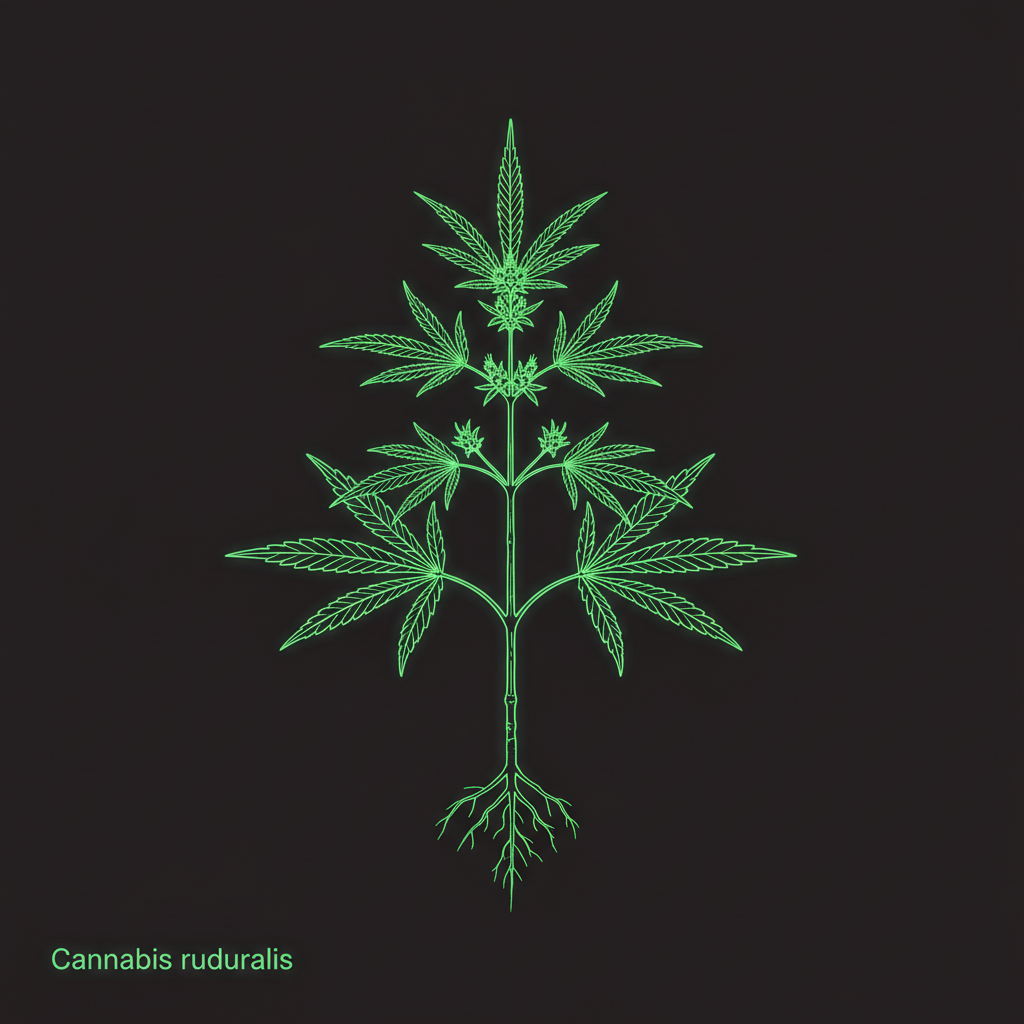
Botanical illustration — Cannabis ruderalis
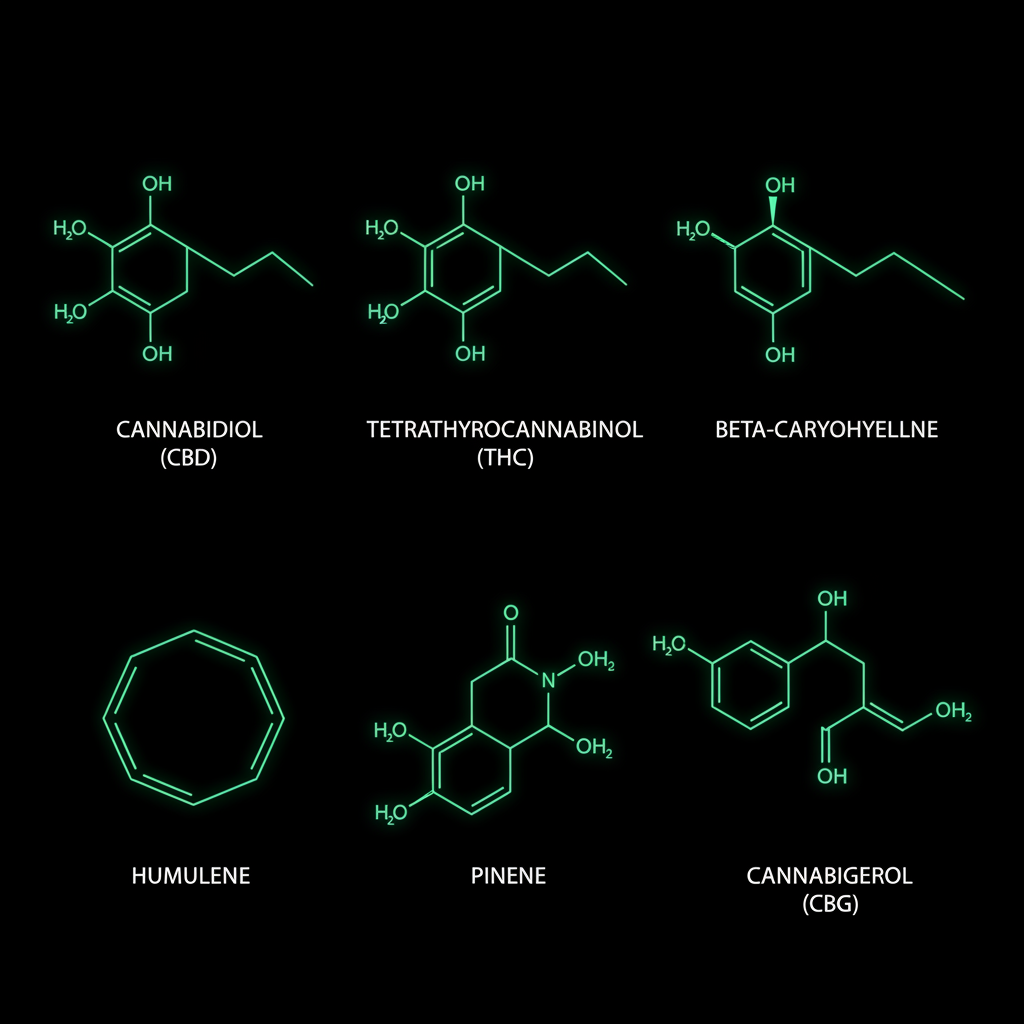
Molecular structures — key phytochemicals
Botanical Profile
Cannabis ruderalis is a low-THC, wild or feral variety of Cannabis native to Central and Eastern Europe, Russia, and Central Asia. It is distinguished from C. sativa and C. indica by its short stature, early flowering, and—most notably—its auto-flowering trait: it transitions from vegetative growth to flowering based on age rather than photoperiod (day length). While historically low in psychoactive compounds, ruderalis genetics are prized by breeders for introducing the auto-flowering trait into modern hybrid cultivars.
Morphology
Cannabis ruderalis is short and bushy, typically 0.3–1.2 m tall, with a sturdy, weedy growth habit. Leaves are smaller and narrower than those of C. sativa or C. indica, usually with 3–5 leaflets. The plant has a short life cycle (often 8–12 weeks from seed to seed) and begins flowering automatically after 3–4 weeks of vegetative growth regardless of light cycle. Flower clusters are typically small and airy compared to domesticated varieties.
Traditional & Ethnobotanical Uses
Cannabis ruderalis has limited documented traditional medicinal use, as wild populations are typically low in cannabinoids. In Russia and Central Asia, it was historically used for fibre and seed oil production rather than for medicinal or psychoactive purposes. Its primary contemporary value is in breeding: auto-flowering hybrids combine ruderalis genetics with high-THC sativa or indica varieties, enabling outdoor cultivation in short-season northern climates.
Phytochemical Profile
Wild-type Cannabis ruderalis is characterised by very low THC content, typically below 1% by dry weight, and low-to-moderate CBD content (1–3%). Modern auto-flowering hybrids bred from ruderalis genetics can produce much higher cannabinoid levels (10–20% THC). Native terpene profiles of pure ruderalis are less studied but include beta-caryophyllene, humulene, and pinene. The cannabinoid profile of wild ruderalis is often CBD-dominant or balanced, in contrast to THC-dominant drug-type varieties.
Mechanisms of Action
The pharmacological effects of pure Cannabis ruderalis are primarily driven by CBD and other non-psychoactive cannabinoids. CBD acts as a negative allosteric modulator of CB1, inhibitor of FAAH, and modulator of 5-HT1A, TRPV1, and PPARγ receptors, producing anxiolytic, anti-inflammatory, anticonvulsant, and neuroprotective effects without psychoactive intoxication. The low THC content means minimal direct CB1 agonism and no significant psychoactive effects from wild-type plants.
Clinical Indications
Conditions
Symptoms
Dosage & Preparation
Pure Cannabis ruderalis has no standardised dosage due to its low cannabinoid content. CBD-dominant preparations derived from or inspired by ruderalis genetics: 25–300 mg/day CBD. Auto-flowering hybrid products should be dosed according to their THC/CBD content under medical guidance.
Safety & Interactions
Contraindications
Generally well-tolerated due to low THC content. Standard cannabis precautions apply for hybrid varieties containing elevated THC. Caution in pregnancy and breastfeeding. Consult a healthcare provider when combining with anti-epileptic medications.
Drug Interactions
CBD-rich preparations may inhibit CYP3A4 and CYP2C19, affecting the metabolism of drugs such as clobazam, warfarin, and tacrolimus. Low-THC wild-type ruderalis has minimal pharmacological drug interaction risk but caution is advised with CBD-rich extracts.
My Research Notes
No notes yet.
References
- [1]Small E. (2017).
- [2]Cannabis: A Complete Guide.
- [3]CRC Press. 2.
- [4]Hillig KW. (2005).
- [5]Genetic evidence for speciation in Cannabis (Cannabaceae).
- [6]Genet Resour Crop Evol. 52(2):161-180. 3.
- [7]Clarke RC, Merlin MD. (2013).
- [8]Cannabis: Evolution and Ethnobotany.
- [9]University of California Press. 4.
- [10]Mandolino GC, Carboni A. (2004).
- [11]The Cannabis genome and the potential of molecular breeding.
- [12]J Ind Hemp. 9(1):87-98..
Latest Research
PubMed LiveACOG Clinical Consensus No. 10: Cannabis Use During Pregnancy and Lactation.
Cannabis and Neuropsychiatric Disorders: An Updated Review.
An Overview of Products and Bias in Research.