Cannabis Sativa
ConditionalCannabis sativa
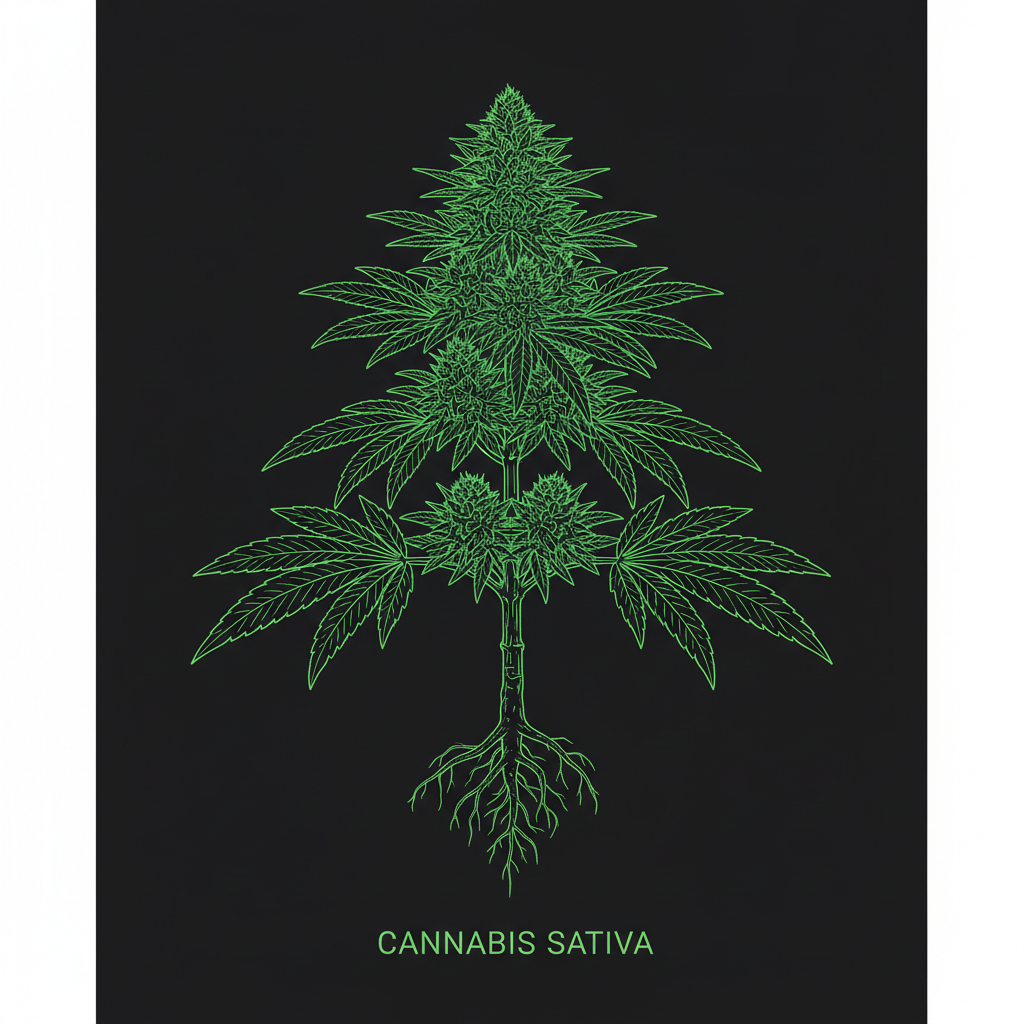
Botanical illustration — Cannabis sativa
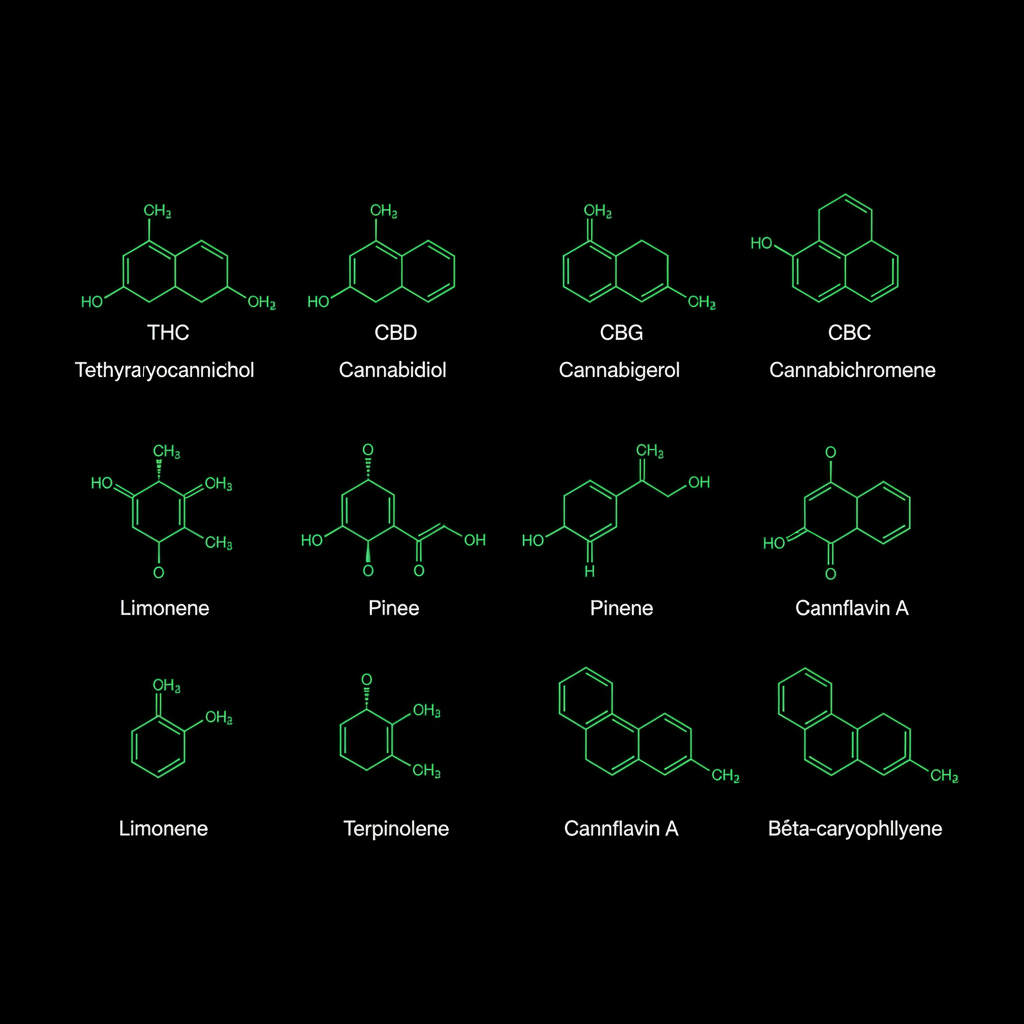
Molecular structures — key phytochemicals
Botanical Profile
Cannabis sativa is a tall, slender annual dioecious (occasionally monoecious) flowering plant native to Eastern and Central Asia. It has been cultivated for millennia for its fibre (hemp), edible seeds, and medicinal and psychoactive resin (hashish, marijuana). Sativa-dominant varieties are traditionally associated with uplifting, cerebral, and energising effects, and tend to be higher in tetrahydrocannabinol (THC) relative to cannabidiol (CBD). Modern taxonomy recognises C. sativa as the most widely cultivated and studied of the Cannabis species complex.
Morphology
Cannabis sativa plants are typically tall (1–5 m) with narrow, serrated, light-green leaflets (often 7–9 per leaf). The stems are robust and fibrous, especially in industrial hemp cultivars. Female plants produce dense clusters of glandular trichomes on the flowers (buds) and surrounding bracts; these trichomes secrete the resin rich in cannabinoids and terpenes. Male plants are generally taller and less bushy, producing pollen-bearing flowers. Root systems are taproot-based and can extend deeply in well-drained soils.
Traditional & Ethnobotanical Uses
Cannabis sativa has a documented ethnobotanical history spanning over 5,000 years. In traditional Chinese medicine, it was used for pain, rheumatism, and as an anaesthetic (described by Hua Tuo, c. 140–208 CE). In Ayurveda, it was used (as 'bhang' or 'vijaya') for anxiety, insomnia, appetite stimulation, and digestive disorders. In the Middle East and North Africa, hashish was used medicinally and in spiritual/Sufi contexts. Indigenous cultures of the Indian subcontinent and Africa used it for fever, dysentery, and as a mood-enhancer in religious rites.
Phytochemical Profile
Cannabis sativa produces over 540 identified phytochemicals. The dominant cannabinoids in sativa-dominant drug-type varieties are tetrahydrocannabinol (THC), typically in the range of 15–25% by dry weight in modern cultivars, with lower CBD levels. Key terpenes include limonene (citrus, uplifting), pinene (pine, memory-retentive), and terpinolene (fresh, herbal). Hemp-type sativa varieties contain less than 0.2–0.3% THC and are bred for CBD, fibre, or seed content. Other notable compounds include cannabigerol (CBG), cannabinol (CBN), cannabichromene (CBC), and flavonoids such as cannflavin A and B.
Mechanisms of Action
Cannabinoids act primarily on the endocannabinoid system. THC is a partial agonist at CB1 (CNS) and CB2 (immune) receptors, producing psychoactive, analgesic, antiemetic, and appetite-stimulating effects. CBD has low affinity for CB receptors but acts as a negative allosteric modulator of CB1, an inhibitor of FAAH (increasing anandamide levels), and modulates 5-HT1A, TRPV1, and PPARγ. Terpenes contribute via entourage effects—limonene has anxiolytic and mood-elevating properties, pinene is a bronchodilator and acetylcholinesterase inhibitor, and beta-caryophyllene is a dietary CB2 agonist.
Clinical Indications
Conditions
Symptoms
Dosage & Preparation
Dosage varies widely by route and indication. Inhaled THC for analgesia: 1–5 mg per session. Oral THC: 2.5–10 mg per dose, titrated upward. CBD: 300–600 mg/day for anxiety (clinical studies), 10–25 mg/kg/day for epilepsy (e.g., Epidiolex). Medical guidance is strongly advised.
Safety & Interactions
Contraindications
Contraindicated in individuals with a personal or family history of psychotic disorders (e.g., schizophrenia). Caution in pregnancy and breastfeeding. Cardiovascular conditions (tachyarrhythmias, unstable angina). Adolescents should avoid THC-containing products due to neurodevelopmental risks.
Drug Interactions
THC is metabolised by CYP2C9 and CYP3A4. Caution with warfarin (INR changes), SSRIs, sedatives, and alcohol (additive CNS depression). CBD is a potent CYP3A4 and CYP2C19 inhibitor—significant interactions with clobazam, warfarin, and tacrolimus are documented.
My Research Notes
No notes yet.
References
- [1]Russo EB. (2007).
- [2]History of Cannabis and its Preparations in Science, Intoxication, and Medicine.
- [3]J Cannabis Ther. 2.
- [4]World Health Organization. (2018).
- [5]Cannabis and cannabis-related substances: Critical review. 3.
- [6]Russo EB, Marcu J. (2017).
- [7]Cannabis Pharmacology: The Usual Suspects and a Few Promising Leads.
- [8]Adv Pharmacol. 80:67-134. 4.
- [9]Grotenhermen F. (2003).
- [10]Pharmacokinetics and pharmacodynamics of cannabinoids.
- [11]Clin Pharmacokinet. 42(4):327-60..
Latest Research
PubMed LiveNo recent publications found.