
Ginkgo
ConditionalGinkgo biloba
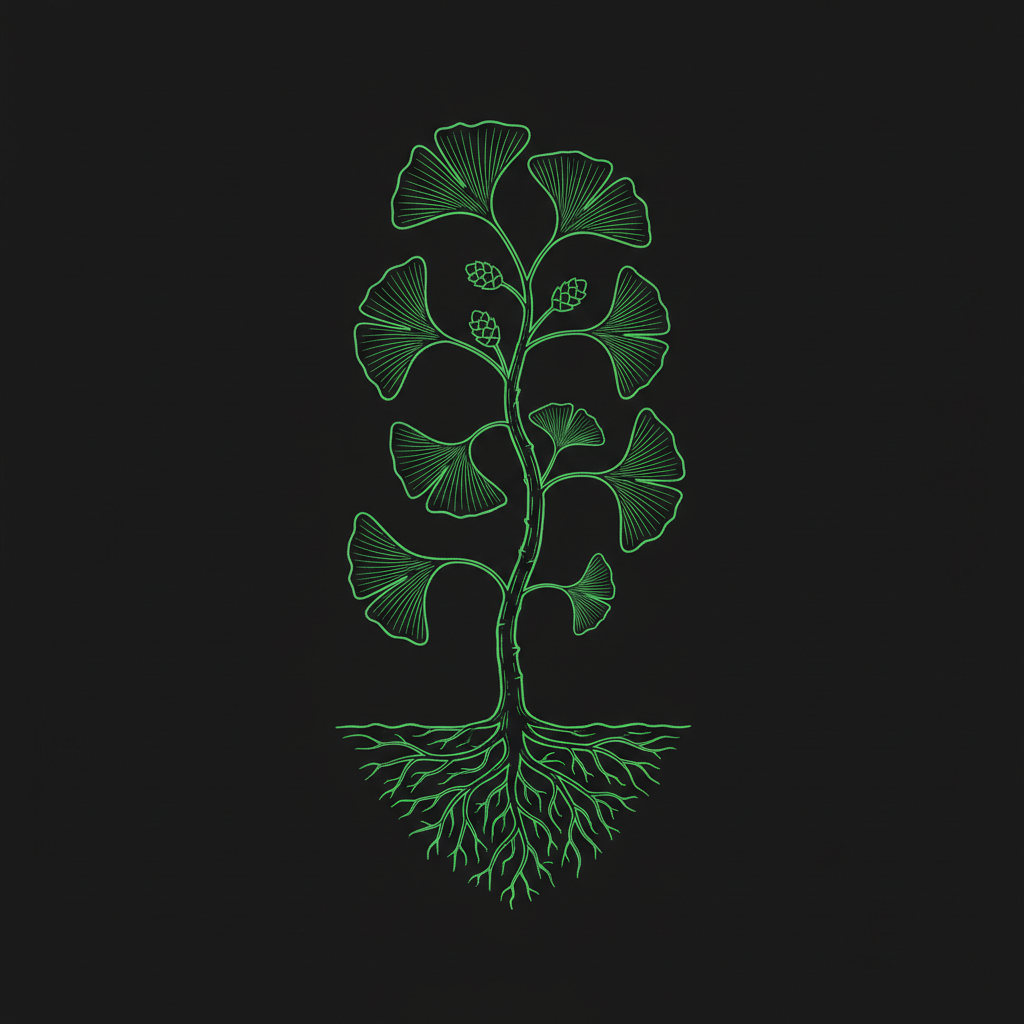
Botanical illustration — Ginkgo biloba
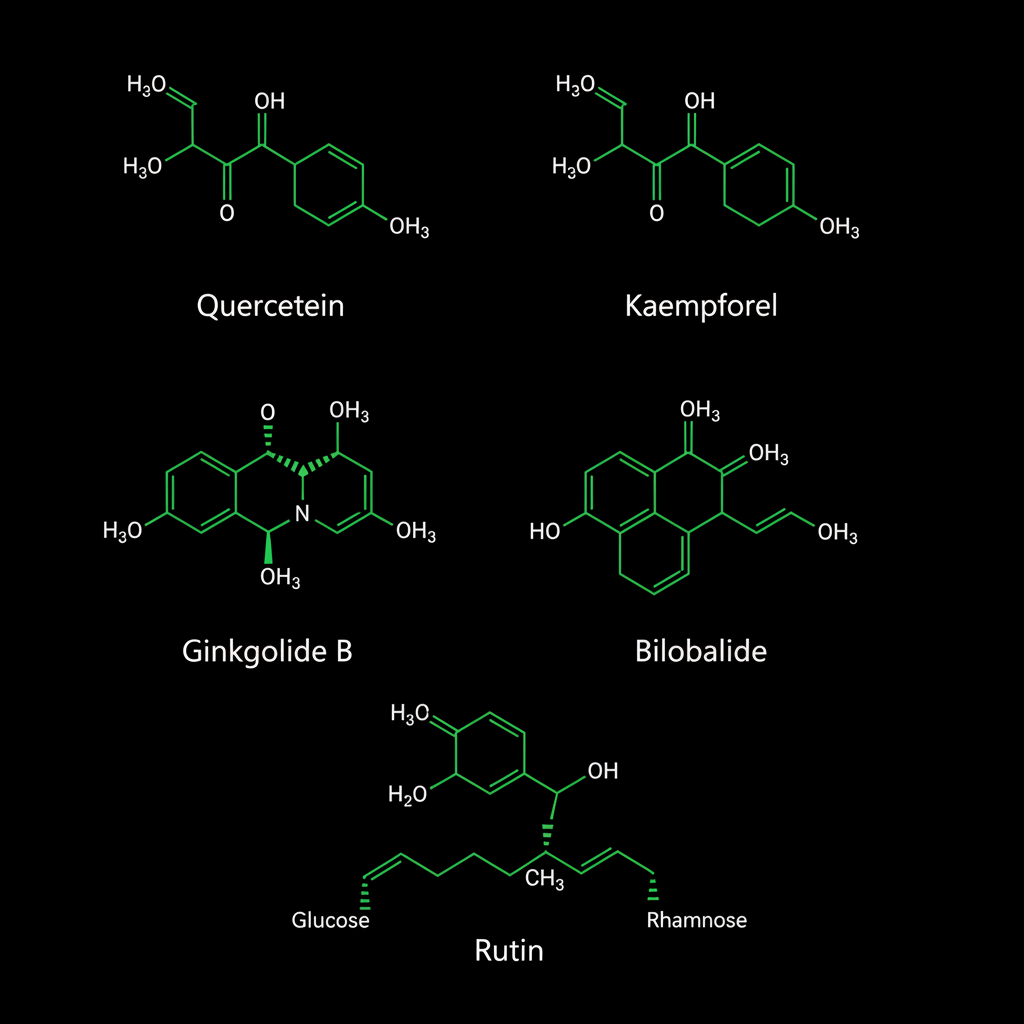
Molecular structures — key phytochemicals
Botanical Profile
A living fossil — the sole surviving species of an ancient order that predates dinosaurs — ginkgo is one of the most widely used botanical medicines worldwide. Its leaf extracts are among the most prescribed phytomedicinals in Europe, particularly for cognitive disorders and peripheral vascular disease.
Morphology
Large deciduous tree reaching 20–35 m (exceptionally 50 m) with a slender crown when young that broadens with age. Distinctive fan-shaped leaves with dichotomous venation, turning golden yellow in autumn. Trees are dioecious; female trees produce naked seeds (often called nuts) enclosed in a fleshy, foul-smelling outer layer. Trunk develops distinctive corky ridges.
Traditional & Ethnobotanical Uses
Ginkgo seeds have been used in Traditional Chinese Medicine for approximately 800 years for respiratory conditions including asthma, cough, and bladder disorders. Leaf use in traditional medicine is more recent, gaining prominence in the 20th century. Modern clinical applications focus on cognitive enhancement, peripheral vascular disease, and tinnitus. The tree holds cultural significance in East Asia, planted near temples and associated with longevity and resilience.
Phytochemical Profile
Standardised ginkgo leaf extract (EGb 761) contains two primary groups of bioactive compounds: (1) Flavonol glycosides (22–27%), primarily quercetin, kaempferol, and isorhamnetin glycosides including rutin; (2) Terpene lactones (5–7%) comprising ginkgolides A, B, C, J, and M, and bilobalide. Also present are biflavones (amentoflavone, bilobetin), proanthocyanidins, and organic acids. Ginkgolic acids are present in raw leaves and are toxic; standardised extracts are required to contain less than 5 ppm.
Mechanisms of Action
Ginkgo exerts multiple pharmacological actions: (1) Platelet-activating factor (PAF) antagonism by ginkgolides, particularly ginkgolide B, reducing platelet aggregation; (2) Antioxidant activity through free radical scavenging and modulation of antioxidant enzyme activity; (3) Improvement of blood rheology and microcirculation through vasodilatory effects and reduced blood viscosity; (4) Neuroprotection via mitochondrial protection (bilobalide) and modulation of neurotransmitter receptors; (5) Anti-inflammatory effects through NF-κB pathway modulation; (6) Enhancement of glucose utilisation and ATP production in neurons.
Clinical Indications
Conditions
Symptoms
Dosage & Preparation
Standardised extract (EGb 761, 24% flavonol glycosides, 6% terpene lactones): 120–240 mg daily in 2–3 divided doses. For cognitive decline: 120 mg twice daily. For intermittent claudication: 160–240 mg daily. Onset of therapeutic effect may require 4–6 weeks of continuous use. Take with food to improve absorption and reduce GI side effects.
Safety & Interactions
Contraindications
Contraindicated in bleeding disorders and haemophilia due to antiplatelet effects. Discontinue 36–48 hours before surgical procedures. Caution in epilepsy (rare reports of seizures at high doses). Avoid consumption of raw ginkgo seeds (contain ginkgotoxin, which can cause seizures). Caution in pregnancy due to antiplatelet effects. Known allergy to ginkgo preparations.
Drug Interactions
Anticoagulants and antiplatelet agents (warfarin, aspirin, clopidogrel, NSAIDs) — additive antiplatelet and anticoagulant effects increase bleeding risk. Anticonvulsants (valproic acid, phenytoin) — may reduce efficacy. SSRIs and MAOIs — potential serotonin syndrome. Insulin — may alter insulin metabolism. Cytochrome P450 substrates — ginkgo modulates CYP2C9, CYP2C19, and CYP3A4.
My Research Notes
No notes yet.
References
- [1]Birks J, Grimley Evans J.
- [2]Ginkgo biloba for cognitive impairment and dementia.
- [3]Cochrane Database Syst Rev. 2009.
- [4](1):CD003120.
- [5]DeKosky ST, et al.
- [6]Ginkgo biloba for prevention of dementia: a randomized controlled trial.
- [7]300(19):2253-62.
- [8]Ginkgo biloba for the prevention and treatment of cardiovascular disease: a review of the literature.
- [9]J Cardiovasc Nurs. 2002.
- [10]16(4):21-32..
Latest Research
PubMed LiveNo recent publications found.