
Ashwagandha
GRASWithania somnifera
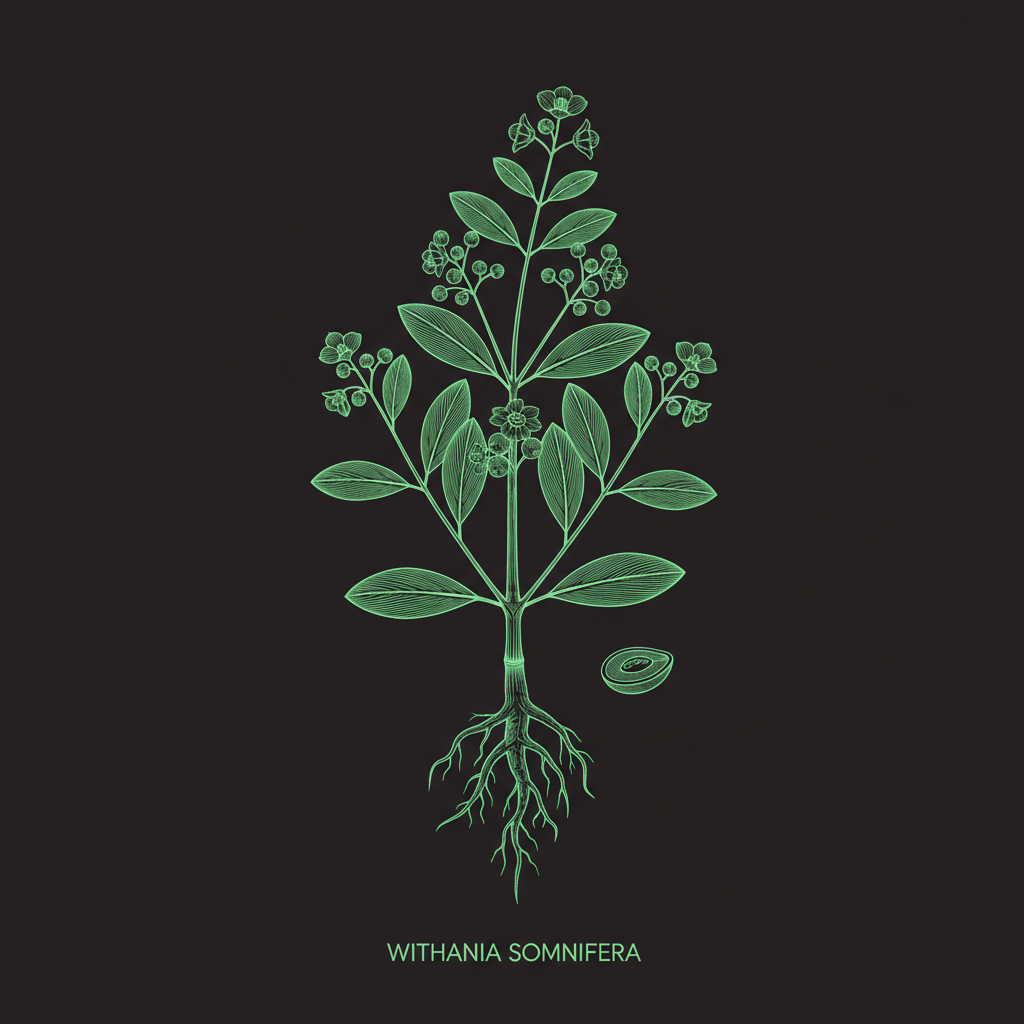
Botanical illustration — Withania somnifera
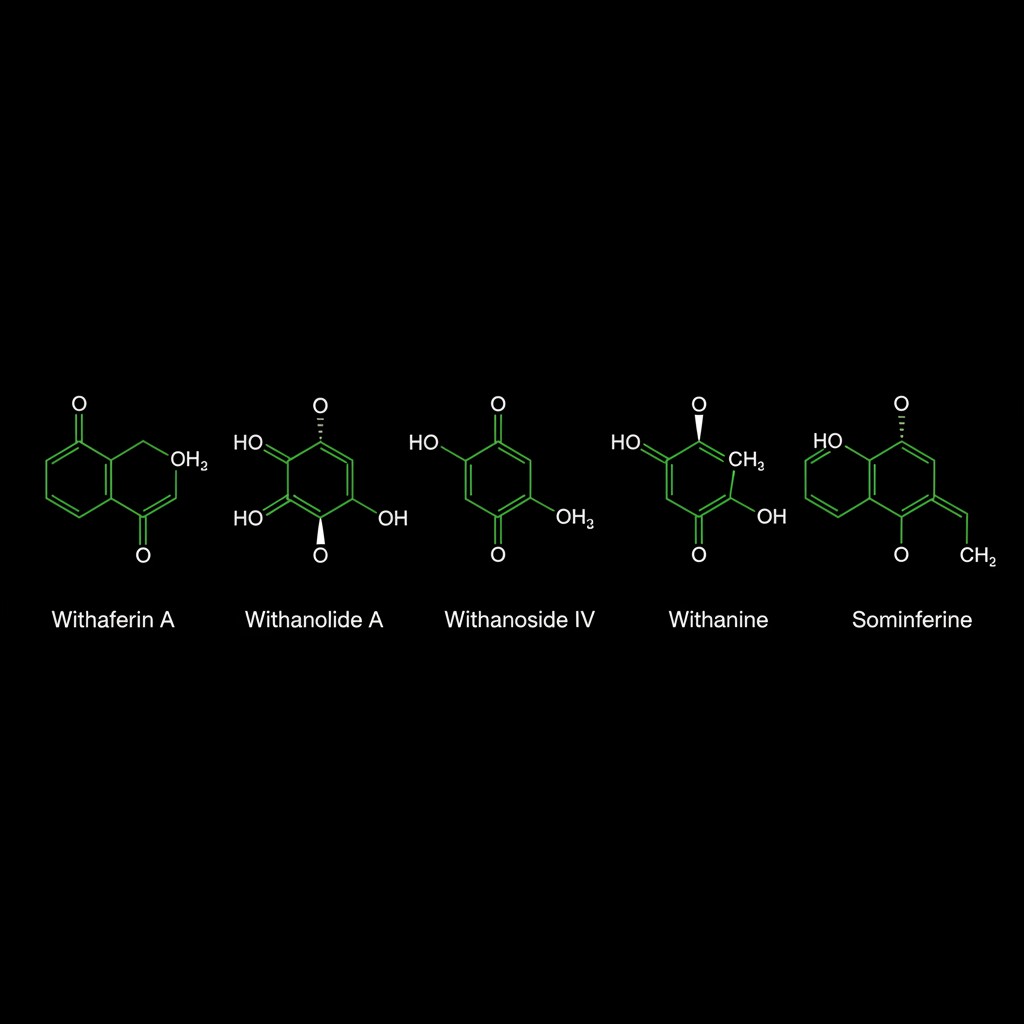
Molecular structures — key phytochemicals
Botanical Profile
One of the most important herbs in Ayurvedic medicine, ashwagandha has been used for over 3,000 years as a rasayana (rejuvenating tonic). Classified as an adaptogen, it modulates the stress response system and has demonstrated significant anxiolytic, neuroprotective, and immunomodulatory activity in clinical trials.
Morphology
Drought-tolerant evergreen shrub growing 35–75 cm tall. Branches extend radially from a central stem. Leaves are dull green, ovate, and elliptic. Small greenish flowers give way to orange-red berries enclosed in papery calyxes. Roots are light brown, tuberous, and have a distinct earthy odour.
Traditional & Ethnobotanical Uses
In Ayurveda, classified as a rasayana herb used for longevity, stress reduction, and cognitive enhancement. Traditional indications include anxiety, insomnia, fatigue, weakness, and as an immunomodulator. Used to enhance strength and vitality. In Unani medicine, used as a tonic and aphrodisiac. Leaves traditionally applied topically for skin conditions and as a poultice for inflammation.
Phytochemical Profile
Primary bioactive constituents are steroidal lactones called withanolides (0.1–0.5% of root by weight), including withaferin A, withanolide A, withanolide D, and withanoside IV–VI. Also present are withanosides (saponins), alkaloids including withanine, somniferine, and tropine. The plant contains sitoindosides VII–X which show significant antistress activity. Iron content in root preparations contributes to haematopoietic effects. Standardised extracts typically provide 2.5–5% withanolides.
Mechanisms of Action
Ashwagandha modulates the hypothalamic-pituitary-adrenal (HPA) axis, reducing elevated cortisol levels and normalising the stress response. Withanolides demonstrate GABAergic activity, binding to GABA-A receptors producing anxiolytic effects without sedation. Withaferin A exhibits anti-inflammatory activity via NF-κB pathway inhibition and COX-2 suppression. Immunomodulatory effects include enhancement of natural killer cell activity and modulation of Th1/Th2 cytokine balance. Neuroprotective effects mediated through antioxidant activity, BDNF upregulation, and amyloid-beta clearance.
Clinical Indications
Conditions
Symptoms
Dosage & Preparation
Root extract standardised to 2.5–5% withanolides: 250–600 mg daily, typically in divided doses. KSM-66 extract: 300 mg twice daily. Sensoril extract: 125–250 mg twice daily. For anxiety and stress: 250–600 mg daily for 6–8 weeks. For insomnia: 300 mg of root extract twice daily, with one dose before bedtime. Whole root powder: 1–6 g daily.
Safety & Interactions
Contraindications
Contraindicated in hyperthyroidism (may stimulate thyroid hormone production). Avoid in autoimmune conditions such as multiple sclerosis and rheumatoid arthritis due to immunostimulatory effects. Caution in pregnancy (abortifacient activity reported in animal studies). Discontinue prior to surgery (potential sedative effects).
Drug Interactions
Thyroid medications — may increase T3/T4 levels, necessitating dose monitoring. Sedatives and CNS depressants (benzodiazepines, barbiturates) — additive sedative effect. Immunosuppressants — may antagonise immunosuppressive therapy. Antidiabetic medications — potential additive hypoglycaemic effect. Antihypertensives — may potentiate blood pressure lowering.
My Research Notes
No notes yet.
References
- [1]Chandrasekhar K, et al.
- [2]A prospective, randomized double-blind, placebo-controlled study of safety and efficacy of a high-concentration full-spectrum extract of ashwagandha root in reducing stress and anxiety.
- [3]Indian J Psychol Med. 2012.
- [4]34(3):255-62.
- [5]Langade D, et al.
- [6]Efficacy and safety of ashwagandha root extract in insomnia.
- [7]Cureus. 2019.
- [8]11(10):e5986.
- [9]Mishra LC, et al.
- [10]Scientific basis for the therapeutic use of Withania somnifera (ashwagandha): a review.
- [11]Altern Med Rev. 2000.
- [12]5(4):334-46..
Latest Research
PubMed LiveNo recent publications found.